3.20.2009
Gotta Start Somewhere
I spent the greater portion of the day collecting data for a GIS project I'm working on in Tucson. Eventually I hope to compile enough usefull data to lead to the development of a unique form of 'greenways' that weave through the city. The idea comes from the Ironwood Tree Experience's GreenLots and Kids Corridor projects. I'm conducting the reasearch to find out where these Lots and Corridors might be best placed. My ultiimate goal is to implement an action based program that involves youth as decision makers and catylists in the Urban Planning process. I've found a few programs out there that have already implemented these types of programs in their cities (I'll post those links later) but I need more! While the kids involved with Kids Corridors and GreenLots take vacant, abandoned or donated land and create their own natural playground, Concrete Changers would work on with the 'concrete and mortar' of the city to create a greening of those features. Ideally, the 'concrete and mortar' planning and green spaces would be adjacent to each other or even interconnected so as to create a 'sustainably green web' throughout the city of tucson.


12.01.2008
Loss Of Open Space
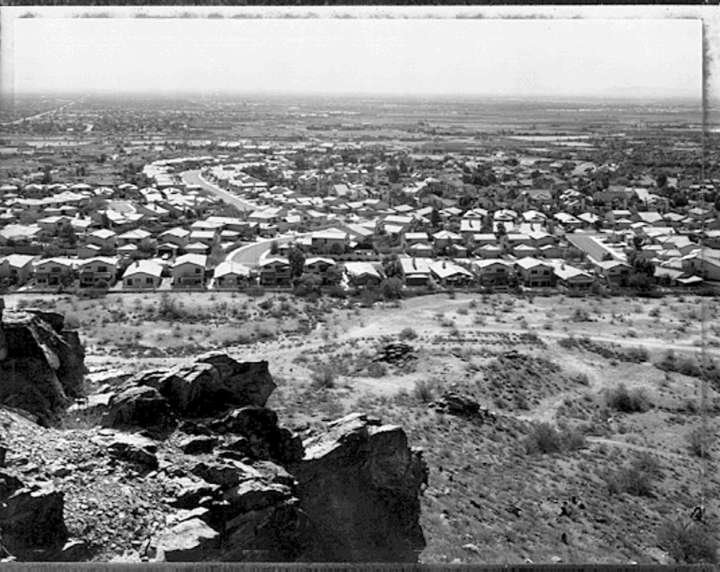
An estimated 6,000 acres of open space are lost each day, a rate of 4 acres per minute. Looking ahead, the Forests on the Edge project estimates that 44 million acres of private forest lands could experience sizeable increases in housing density by 2030. Public forests are also affected -- the new National Forests on the Edge publication estimates that 21 million acres of private rural lands near national forests and grasslands will experience substantial housing density increases by 2030.The Forest Service has developed a Open Space Conservation Strategy to identify how the agency can best help conserve open space, with an emphasis on partnerships and collaborative approaches. The agency is interested in addressing the effects of the loss of open space on private forests; on National Forests and Grasslands and the surrounding landscape; and on forests in cities, suburbs, and towns.
See examples of open space loss http://www.fs.fed.us/openspace/loss_space.html
site: http://www.fs.fed.us/openspace/
See examples of open space loss http://www.fs.fed.us/openspace/loss_space.html
site: http://www.fs.fed.us/openspace/
2008 Farm Bill
New Tax provisions pass in the 2008 Farm Bill The Farm Bill (H.R. 2419) which Congress enacted on May 22, 2008 with an override of the President's veto, renews a powerful tax incentive which has helped conserve a million or more acres of natural areas, farms, and ranches across the US. The incentive had expired January 1st, but is now retroactive to the beginning of the year and will last through 2009.
The incentive, which applies to a landowner's federal income tax, will:
Raise the deduction a donor can take for donating a voluntary conservation agreement from 30% of their income in any year to 50%;
Allow farmers and ranchers to deduct up to 100% of their income; and
Increase the number of years over which a donor can take deductions from 5 to 15 succeeding years.
Example:A land owner, who has a taxable estate, owns 100 acres with a fair market value of $3,000,000. Placing a conversation easement on the property restricts the ability of the owner to develop the land and reduces the fair market value of the land. If the value of the land was reduced by the easement from $3,000,000 to $1,500,000, the estate tax savings would be $675,000 ($1,500,000 x 45%).
In addition to reducing estate tax, the landowner receives a current income tax benefit by being able to deduct the $1,500,000 reduction in value as a charitable contribution on their individual income tax returns, if the easement was donated to a qualified charity or certain government entities.
site: http://www.conservationtaxcenter.org/
The incentive, which applies to a landowner's federal income tax, will:
Raise the deduction a donor can take for donating a voluntary conservation agreement from 30% of their income in any year to 50%;
Allow farmers and ranchers to deduct up to 100% of their income; and
Increase the number of years over which a donor can take deductions from 5 to 15 succeeding years.
Example:A land owner, who has a taxable estate, owns 100 acres with a fair market value of $3,000,000. Placing a conversation easement on the property restricts the ability of the owner to develop the land and reduces the fair market value of the land. If the value of the land was reduced by the easement from $3,000,000 to $1,500,000, the estate tax savings would be $675,000 ($1,500,000 x 45%).
In addition to reducing estate tax, the landowner receives a current income tax benefit by being able to deduct the $1,500,000 reduction in value as a charitable contribution on their individual income tax returns, if the easement was donated to a qualified charity or certain government entities.
site: http://www.conservationtaxcenter.org/
10.02.2008
Experience
A sense of place requires more direct contact with the natural aspects of a place, with soils, landscape, and wildlife. This sense is lost as we move down the continuum toward the totalized urban environment where nature exists in tiny, isolated fragments by permission only. Said differently, this is an argument for more urban parks, summer camps, greenbelts, wilderness areas, public seashores. If we must live in an increasingly urban world, let’s make it one of well designed compact green cities that include trees, river parks, meandering greenbelts, and urban farms where people can see, touch, and experience nature in a variety of ways.
David W. Orr
Ecological Literacy, 1992
(from Sonoran Desert Perserve Master Plan)
10.01.2008
A New Standard of Land Development

Developer shows that creating homes can also mean preserving habitat and beauty and sets a new standard of best practices.
These new standards include:
• Protecting the land and its wildlife corridors forever. Ninety-five percent of the land at Three Canyons is permanently preserved as open space.
• Protecting the land and its wildlife corridors forever. Ninety-five percent of the land at Three Canyons is permanently preserved as open space.
• Creating a land management plan that is designed to replenish the environment through human activity, not despite it.
• Collaborating and investing in the surrounding community through local initiatives, such as an organic farm and providing funds for the community foundation’s endowment.
• Establishing a non-profit Conservation Stewardship Organization, La Semilla, to oversee land restoration and preservation and providing funding through a transfer fee each time a lot or home in Three Canyons is sold.
• Investing $3 million in the Three Canyons Water Improvement District, the first of its kind in Santa Cruz County – unlike many rural “ranchette” developments where each home site has its own well with no oversight.
State Land Trust

Arizona has approximately 9.28 million surface acres and 9 million subsurface acres of Trust lands. Scattered throughout the State, the Trust lands are extremely diverse in character, ranging from Sonoran desert lands, desert grasslands, and riparian areas in the southern half of the state, to the mountains, forests and Colorado Plateau regions of northern Arizona. The majority of the Trust lands are located in rural areas of the State with more than one million acres located within or adjacent to urbanized areas. The Trust lands constitute approximately 13% of land ownership in Arizona.
State Trust lands are often misunderstood in terms of both their character and their management. They are not public lands, but are instead the subject of a public Trust created to support the education of our children. The Trust accomplishes this mission in a number of ways, including, through its sale and lease of Trust lands for grazing, agriculture, municipal, school site, residential, commercial and open space purposes. In both rural and urban contexts, Trust lands also provide the substantial added benefit of creating critical local economic stimulation.
8.06.2008
Omnibus Public Land Management Act of 2008
The Cause:
The Senate Public Lands Package, which not only has the National Landscape Conservation System Act contained within it, but also contains new Wilderness, Monument, and NCA for such great places as New Mexico, California, and Idaho to name a few. These are all new units for the Conservation System.
"From Wilderness, and NCAs and Monuments to important legislation on National Trails, we can all likely find something in this package that is worth our attention and effort to get passed this year. Of course the National Landscape Conservation System Act is also in this package, so it is my hope that as you outreach to your members to have them contact their Senators, you can give them a better sense of what is at stake if this package does not pass the Senate in 2008." National Landscape Conservation System
The Case:
The FATE of the Senate lands package my not rest in our collective hands. The Senate is now in their summer recess. We know that when they are back in their home states they are going to get an earful about: gas prices. The risk is that in the 21 days (yes only 21 days) of the Senate session that remains when they come back in September, they may choose to act only those things that there constituents are asking them to act on.
We NEED one of the things on their agenda to be passage of the Omnibus Public Land Management Act of 2008. If the Senate does not hear from us and our members, they may not take up a vote on this important measure. Time is of the essence.
The Facts:
View "Ominbus Public Land Management Act of 2008" in side panel of links --->
The Senate Public Lands Package, which not only has the National Landscape Conservation System Act contained within it, but also contains new Wilderness, Monument, and NCA for such great places as New Mexico, California, and Idaho to name a few. These are all new units for the Conservation System.
"From Wilderness, and NCAs and Monuments to important legislation on National Trails, we can all likely find something in this package that is worth our attention and effort to get passed this year. Of course the National Landscape Conservation System Act is also in this package, so it is my hope that as you outreach to your members to have them contact their Senators, you can give them a better sense of what is at stake if this package does not pass the Senate in 2008." National Landscape Conservation System
The Case:
The FATE of the Senate lands package my not rest in our collective hands. The Senate is now in their summer recess. We know that when they are back in their home states they are going to get an earful about: gas prices. The risk is that in the 21 days (yes only 21 days) of the Senate session that remains when they come back in September, they may choose to act only those things that there constituents are asking them to act on.
We NEED one of the things on their agenda to be passage of the Omnibus Public Land Management Act of 2008. If the Senate does not hear from us and our members, they may not take up a vote on this important measure. Time is of the essence.
The Facts:
View "Ominbus Public Land Management Act of 2008" in side panel of links --->
7.05.2008
Green TV
You can view the preliminary segments of the new show 4EVERGREEN13 at:
http://www.youtube.com/user/4EverGreen13
http://www.youtube.com/user
Subscribe to:
Posts (Atom)
Subscribe Now: Feed Icon

About Me

My Blog List


White Tank Mountains
3 Canyons

All the News